Non Digital Multimeter Explained: A UK Buyer's Guide
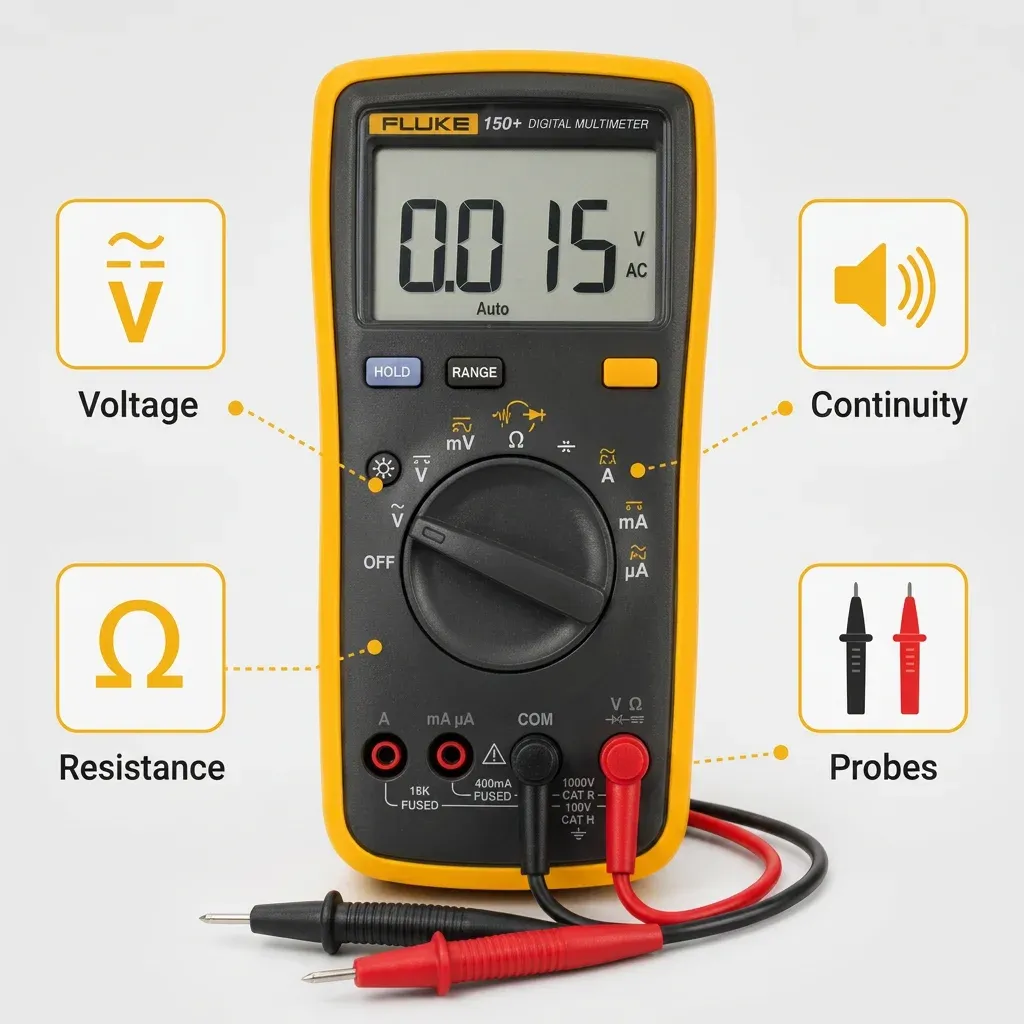
A non digital multimeter still has a firm place in many UK toolkits. While modern electricians often reach for a True RMS digital model first, analogue meters remain useful for spotting fluctuating readings, checking trends on live circuits and working in situations where a moving needle tells you more than changing digits ever could.
For buyers comparing old-school analogue instruments with trade-grade digital options, the real question is not whether one is universally better. It is which type suits the job, the environment and the level of accuracy required. At DigitalMul, the focus is on professional Fluke multimeters and dependable True RMS digital instruments trusted by UK electricians, but understanding where a non digital multimeter fits helps you buy more intelligently.
This guide explains what a non digital multimeter is, how it works, where it still makes sense in Britain today and when upgrading to a modern meter is the safer and more efficient choice.
Key Takeaways
- A non digital multimeter is an analogue meter that uses a needle and scale rather than a digital display.
- It can be useful for observing changing trends or unstable signals because the pointer movement is easy to interpret visually.
- Analogue meters are generally less precise than quality digital models and are easier to misread due to parallax and range selection errors.
- For UK trade work, safety ratings, accuracy and compliance matter more than nostalgia or habit.
- In many professional settings, a genuine True RMS digital multimeter from a trusted supplier is the stronger long-term investment.
What is a non digital multimeter?
A non digital multimeter is an analogue electrical test instrument that measures values such as voltage, current and resistance using a mechanical pointer moving across a printed scale. Instead of showing numbers on an LCD screen, it indicates results with a needle position.
Older electricians across the UK often trained with these meters before digital models became standard. You may also hear them called analogue multimeters, needle meters or pointer meters. In practical terms, they perform the same broad family of checks as basic digital units, but they do so in a very different way.
How it works
Inside an analogue meter, current passing through a moving-coil mechanism causes the pointer to deflect across calibrated markings. The user selects the correct function and range manually, then reads the corresponding value from the scale face.
This design gives immediate visual feedback. If voltage rises or falls rapidly, you see the needle swing in real time. That can be genuinely helpful when tracing intermittent faults or checking gradual changes in a circuit.
What it typically measures
- AC voltage
- DC voltage
- Current on selected ranges
- Resistance
- Continuity on some models
- Occasionally transistor or battery testing on specialist units
The difference from modern trade meters
The main difference is not only the display. Most professional digital instruments now offer stronger input protection, clearer read-outs, more stable accuracy and features such as auto-ranging, backlighting and True RMS measurement for non-linear loads. If you want to understand how auto-ranging changes day-to-day use, see The Ultimate Guide to Multimeter With Auto Ranging in the UK.
Why some UK users still choose an analogue meter
Despite decades of progress in test equipment, there are still valid reasons why some users prefer an analogue format for specific tasks.
Easier to see fluctuation and drift
A moving pointer can make unstable signals easier to interpret than rapidly changing digits. When checking whether resistance is creeping up or voltage is dipping under load, the eye often understands motion faster than numbers refreshing on-screen.
No dependence on complex electronics
Simpler construction appeals to users who want basic functionality without menus or advanced settings. For occasional bench use or educational settings, that simplicity can feel intuitive.
A familiar tool for experienced engineers
Some technicians trained on analogue kit continue to value it because they know exactly how it behaves. In maintenance environments with long-standing work practices, familiarity can still influence buying decisions.
Useful for learning electrical principles
An analogue meter can teach core concepts clearly because users must think about range selection, polarity and scale reading. It shows what measurement actually means rather than automating every step.
The limitations of a non digital multimeter
This is where many buyers need clarity. A non digital multimeter may still be useful, but its weaknesses become obvious when measured against current trade expectations in Britain.
Lower precision in real-world use
A quality analogue meter can be respectable within its designed tolerance, but precise reading depends heavily on user interpretation. Needle width, viewing angle and crowded scales all introduce uncertainty. By contrast, a good digital display reduces ambiguity instantly.
Parallax error can affect readings
If you do not view the needle straight-on, your reading may be off. This matters when diagnosing low-voltage issues or carrying out repeated comparative tests where small differences count.
manual range selection adds risk of error
Selecting the wrong range may not only produce confusing results; in some cases it can damage the meter or create unsafe conditions if used carelessly. Modern auto-ranging models reduce this burden significantly. For more detail on that benefit, read our guide to the auto ranging multimeter.
Usually fewer safety features
This point matters most for professional buyers. Many older or budget analogue meters do not offer the input protection standards expected for modern commercial or industrial work. In UK environments where compliance and safe isolation procedures are critical, that limitation cannot be brushed aside.
Poor fit for modern electrical systems
Today’s installations include variable speed drives, electronic controls, switched-mode power supplies and other non-linear loads. In these contexts, high-quality True RMS digital instruments are often far better suited to accurate diagnostics than traditional pointer meters.
The Health and Safety Executive reports that electricity causes around 1,000 workplace accidents and about 30 fatalities each year in Great Britain. Source: HSE guidance on electrical safety at work. Choosing correctly rated test equipment is part of reducing that risk.
That statistic should sharpen any buying decision. Accuracy alone is not enough; proper safety category ratings and dependable build quality matter just as much.
When a non digital multimeter makes sense in the UK
><ప>A non digital multimeter can still be suitable in several specific situations, especially when expectations are realistic.<պ><ପ><ప><प><प><ప>
>
- Educational use when teaching basic electrical measurement principles
- Vintage electronics servicing where observing changing behaviour matters more than absolute precision
- Simple battery or continuity checks on low-energy circuits using an appropriate instrument
- Bench work by experienced users who understand manual ranging thoroughly
- Niche diagnostic scenarios where pointer movement offers clearer visual trend information than digits alone
If your work involves domestic installations, facilities maintenance, HVAC fault-finding or commercial electrical testing across Britain, most professionals will gain more from using a properly specified digital model instead.
When you should choose a modern digital multimeter instead
A buyer considering professional use should usually treat an analogue meter as supplementary rather than primary kit. A modern trade-grade unit is often the better option if any of the following apply:
- You need clear numerical readings without interpretation errors
- You work with modern appliances or electronic control systems
- You require True RMS measurements for distorted waveforms
- You want CAT-rated safety designed for real site conditions
- You need fast dispatch and reliable stock from a trusted UK supplier
- You prefer robust instruments used widely by professional electricians >
If you are weighing up practical features beyond basic display type, our article on the
Tis 258 Digital Multimeter Explained: A UK Buyer's Guide offers another useful comparison point from a buyer’s perspective.
Look for CAT ratings appropriate to your intended environment.
For mains work in Britain,
this matters enormously.
A meter used near distribution boards,
consumer units or fixed installation points should never be chosen casually.< / p >
Check published tolerances,
not assumptions.
An inexpensive analogue model might be adequate for rough indication,
but if your job depends on precise fault-finding,
a better instrument pays for itself quickly.< / p >
Test equipment gets knocked about.
Trade buyers should favour durable casings,
quality leads,
reputable fusing arrangements and brands with proven field reliability.< / p >
This seems obvious,
yet it affects daily efficiency.
An uncluttered LCD with stable figures saves time.
Analogue scales become slower when light is poor or access is awkward.< / p >
If you test electronic loads,
inverters,
motor drives or modern building systems,
True RMS matters.
Average-responding meters may give misleading readings under those conditions.< / p >
Buy from established UK sellers offering genuine stock,
clear product information and fast dispatch.
That reduces counterfeit risk and gives professionals confidence when deadlines are tight.< / p >
For readers researching broader buying criteria,
our pillar guide covers this area in more depth:
The Ultimate Guide to Multimeter With Auto Ranging in the UK.
It explains why features once considered premium are now standard expectations for many serious users.< / p >
What UK buyers should check before purchasing any multimeter
If you are shopping for a non digital multimeter or comparing one against newer alternatives,
the buying checklist below will help you avoid expensive mistakes.
1. Safety category rating< / h3 >
2.
Accuracy specification< / h3 >
3.
Build quality< / h3 >
4.
Ease of reading< / h3 >
5.
True RMS capability< / h3 >
6.
Supplier trust< / h3 >
Non digital vs digital multimeter: which is better?
There is no universal winner detached from context, but there is a clear answer for most buyers today.< / p >
Choose a non digital multimeter if:< / h3 >
- You specifically want an analogue pointer display< / li >
- You understand manual ranging well< / li >
- Your tasks are low-risk,
simple or educational< / li >
- You value visual trend indication over exact numeric precision< / li >
Choose a digital multimeter if:< / h3 >
- You need higher everyday accuracy< / li >
- You require safer operation around real installations< / li >
- You work professionally in domestic,
commercial or industrial settings< / li >
- You need features such as auto-ranging,
True RMS,
hold functions or backlit displays< / li >
- You want faster,
clearer decision-making on site< / li >
< / ul >
For most electricians,
maintenance engineers and serious DIY users in Britain,
the balance now favours quality digital instruments.
That does not make analogue tools obsolete;
it simply places them into narrower use cases.< / p >
If auto-ranging remains unfamiliar,
return to our detailed guide:
The Ultimate Guide to Multimeter With Auto Ranging in the UK.
It complements this article well because many buyers move directly from considering an old-style manual meter to asking whether auto-ranging will improve speed and confidence.< / p >
<
/section >
A practical recommendation from DigitalMul< / h2 >
From hands-on trade experience across UK electrical work,
the strongest long-term buying decision for most people is not simply choosing between old and new displays.
It is choosing equipment that delivers reliable readings safely under genuine working conditions.< /
p >
That is why DigitalMul’s range leans into professional Fluke multimeters and true RMS digital models trusted by UK electricians.
The appeal is straightforward:
genuine stock,
fast dispatch and uncompromising accuracy.
When your work affects property safety,
business continuity or essential environments such as healthcare estates,
that level of dependability matters far more than nostalgia for older formats.< /
p >
A non digital multimeter may still deserve space on certain benches.
As a primary tool for broad modern electrical testing,
a well-specified digital unit usually makes better commercial sense.< /
p >
<
/ section >
Shop trade-grade multimeters with confidence< /
h2 >
If you are ready to move beyond basic comparison shopping,
browse DigitalMul’s range of professional test equipment designed around what UK electricians actually use day after day.< /
p >
Explore DigitalMul’s professional Fluke multimeters and True RMS digital multimeters today.
For added research before you buy,
you may also find these guides useful:
Auto Ranging Multimeter Explained: A UK Buyer's Guide,
Tis 258 Digital Multimeter Explained: A UK Buyer's Guide,
and our cornerstone article
The Ultimate Guide to Multimeter With Auto Ranging in the UK.
<
/ p >
<
/ section >
Frequently Asked Questions< /
h2 >
Is a non digital multimeter the same as an analogue multimeter?< /
h3 >
Yes.
In normal usage they mean the same thing:
a meter with a moving needle rather than an electronic numerical display.< /
p >
Are non digital multimeters still used in the UK?< /
h3 >
Yes,
but mostly in niche situations such as education,
certain bench diagnostics or by users who prefer pointer-based readings.
For mainstream trade electrical work,
digital models are far more common.< /
p >
Is a non digital multimeter accurate enough for electrician work?< /
h3 >
For rough indication it may be acceptable depending on the task and instrument quality.
For professional fault-finding,
verification and work around modern systems,
most electricians will benefit from the greater clarity,
protection and precision of a quality CAT-rated цифровой? No! Let me correct cleanly:
digital meter.< /
p >
Should I buy an analogue meter or a True RMS digital meter?< /
h3 >
If you mainly want safe,
reliable performance across present-day electrical systems in Britain,
a True RMS digital model is usually the stronger choice.
An analogue meter makes sense only if you have specific reasons to prefer needle-based indication.< /
p >
<
/ section >
Choose a digital multimeter if:< / h3 >
- You need higher everyday accuracy< / li >
- You require safer operation around real installations< / li >
- You work professionally in domestic,
commercial or industrial settings< / li >
- You need features such as auto-ranging,
True RMS,
hold functions or backlit displays< / li >
- You want faster,
clearer decision-making on site< / li >
< / ul >
For most electricians,
maintenance engineers and serious DIY users in Britain,
the balance now favours quality digital instruments.
That does not make analogue tools obsolete;
it simply places them into narrower use cases.< / p >
If auto-ranging remains unfamiliar,
return to our detailed guide:
The Ultimate Guide to Multimeter With Auto Ranging in the UK.
It complements this article well because many buyers move directly from considering an old-style manual meter to asking whether auto-ranging will improve speed and confidence.< / p >
<
/section >
A practical recommendation from DigitalMul< / h2 >
From hands-on trade experience across UK electrical work,
the strongest long-term buying decision for most people is not simply choosing between old and new displays.
It is choosing equipment that delivers reliable readings safely under genuine working conditions.< /
p >
That is why DigitalMul’s range leans into professional Fluke multimeters and true RMS digital models trusted by UK electricians.
The appeal is straightforward:
genuine stock,
fast dispatch and uncompromising accuracy.
When your work affects property safety,
business continuity or essential environments such as healthcare estates,
that level of dependability matters far more than nostalgia for older formats.< /
p >
A non digital multimeter may still deserve space on certain benches.
As a primary tool for broad modern electrical testing,
a well-specified digital unit usually makes better commercial sense.< /
p >
<
/ section >
Shop trade-grade multimeters with confidence< /
h2 >
If you are ready to move beyond basic comparison shopping,
browse DigitalMul’s range of professional test equipment designed around what UK electricians actually use day after day.< /
p >
Explore DigitalMul’s professional Fluke multimeters and True RMS digital multimeters today.
For added research before you buy,
you may also find these guides useful:
Auto Ranging Multimeter Explained: A UK Buyer's Guide,
Tis 258 Digital Multimeter Explained: A UK Buyer's Guide,
and our cornerstone article
The Ultimate Guide to Multimeter With Auto Ranging in the UK.
<
/ p >
<
/ section >
Frequently Asked Questions< /
h2 >
Is a non digital multimeter the same as an analogue multimeter?< /
h3 >
Yes.
In normal usage they mean the same thing:
a meter with a moving needle rather than an electronic numerical display.< /
p >
Are non digital multimeters still used in the UK?< /
h3 >
Yes,
but mostly in niche situations such as education,
certain bench diagnostics or by users who prefer pointer-based readings.
For mainstream trade electrical work,
digital models are far more common.< /
p >
Is a non digital multimeter accurate enough for electrician work?< /
h3 >
For rough indication it may be acceptable depending on the task and instrument quality.
For professional fault-finding,
verification and work around modern systems,
most electricians will benefit from the greater clarity,
protection and precision of a quality CAT-rated цифровой? No! Let me correct cleanly:
digital meter.< /
p >
Should I buy an analogue meter or a True RMS digital meter?< /
h3 >
If you mainly want safe,
reliable performance across present-day electrical systems in Britain,
a True RMS digital model is usually the stronger choice.
An analogue meter makes sense only if you have specific reasons to prefer needle-based indication.< /
p >
<
/ section >
For most electricians, maintenance engineers and serious DIY users in Britain, the balance now favours quality digital instruments. That does not make analogue tools obsolete; it simply places them into narrower use cases.< / p >
If auto-ranging remains unfamiliar,
return to our detailed guide:
The Ultimate Guide to Multimeter With Auto Ranging in the UK.
It complements this article well because many buyers move directly from considering an old-style manual meter to asking whether auto-ranging will improve speed and confidence.< / p >
<
/section >
From hands-on trade experience across UK electrical work,
the strongest long-term buying decision for most people is not simply choosing between old and new displays.
It is choosing equipment that delivers reliable readings safely under genuine working conditions.< /
p >
That is why DigitalMul’s range leans into professional Fluke multimeters and true RMS digital models trusted by UK electricians.
The appeal is straightforward:
genuine stock,
fast dispatch and uncompromising accuracy.
When your work affects property safety,
business continuity or essential environments such as healthcare estates,
that level of dependability matters far more than nostalgia for older formats.< /
p >
A non digital multimeter may still deserve space on certain benches.
As a primary tool for broad modern electrical testing,
a well-specified digital unit usually makes better commercial sense.< /
p >
<
/ section >
If you are ready to move beyond basic comparison shopping,
browse DigitalMul’s range of professional test equipment designed around what UK electricians actually use day after day.< /
p >
Explore DigitalMul’s professional Fluke multimeters and True RMS digital multimeters today.
For added research before you buy,
you may also find these guides useful:
Auto Ranging Multimeter Explained: A UK Buyer's Guide,
Tis 258 Digital Multimeter Explained: A UK Buyer's Guide,
and our cornerstone article
The Ultimate Guide to Multimeter With Auto Ranging in the UK.
<
/ p >
<
/ section >
Yes.
In normal usage they mean the same thing:
a meter with a moving needle rather than an electronic numerical display.< /
p >
Yes,
but mostly in niche situations such as education,
certain bench diagnostics or by users who prefer pointer-based readings.
For mainstream trade electrical work,
digital models are far more common.< /
p >
For rough indication it may be acceptable depending on the task and instrument quality.
For professional fault-finding,
verification and work around modern systems,
most electricians will benefit from the greater clarity,
protection and precision of a quality CAT-rated цифровой? No! Let me correct cleanly:
digital meter.< /
p >
If you mainly want safe,
reliable performance across present-day electrical systems in Britain,
a True RMS digital model is usually the stronger choice.
An analogue meter makes sense only if you have specific reasons to prefer needle-based indication.< /
p >
<
/ section >
A practical recommendation from DigitalMul< / h2 >
Shop trade-grade multimeters with confidence< /
h2 >
Frequently Asked Questions< /
h2 >
Is a non digital multimeter the same as an analogue multimeter?< /
h3 >
Are non digital multimeters still used in the UK?< /
h3 >
Is a non digital multimeter accurate enough for electrician work?< /
h3 >
Should I buy an analogue meter or a True RMS digital meter?< /
h3 >
Ready to upgrade your diagnostics with {brand_name}?
View the Range — £209.30